Why do we build particle accelerators and what can we observe with them? Why do we need knowledge from particle physics to understand the origin of the universe and the processes within it? And what possible applications do the technologies based on this have in everyday life?
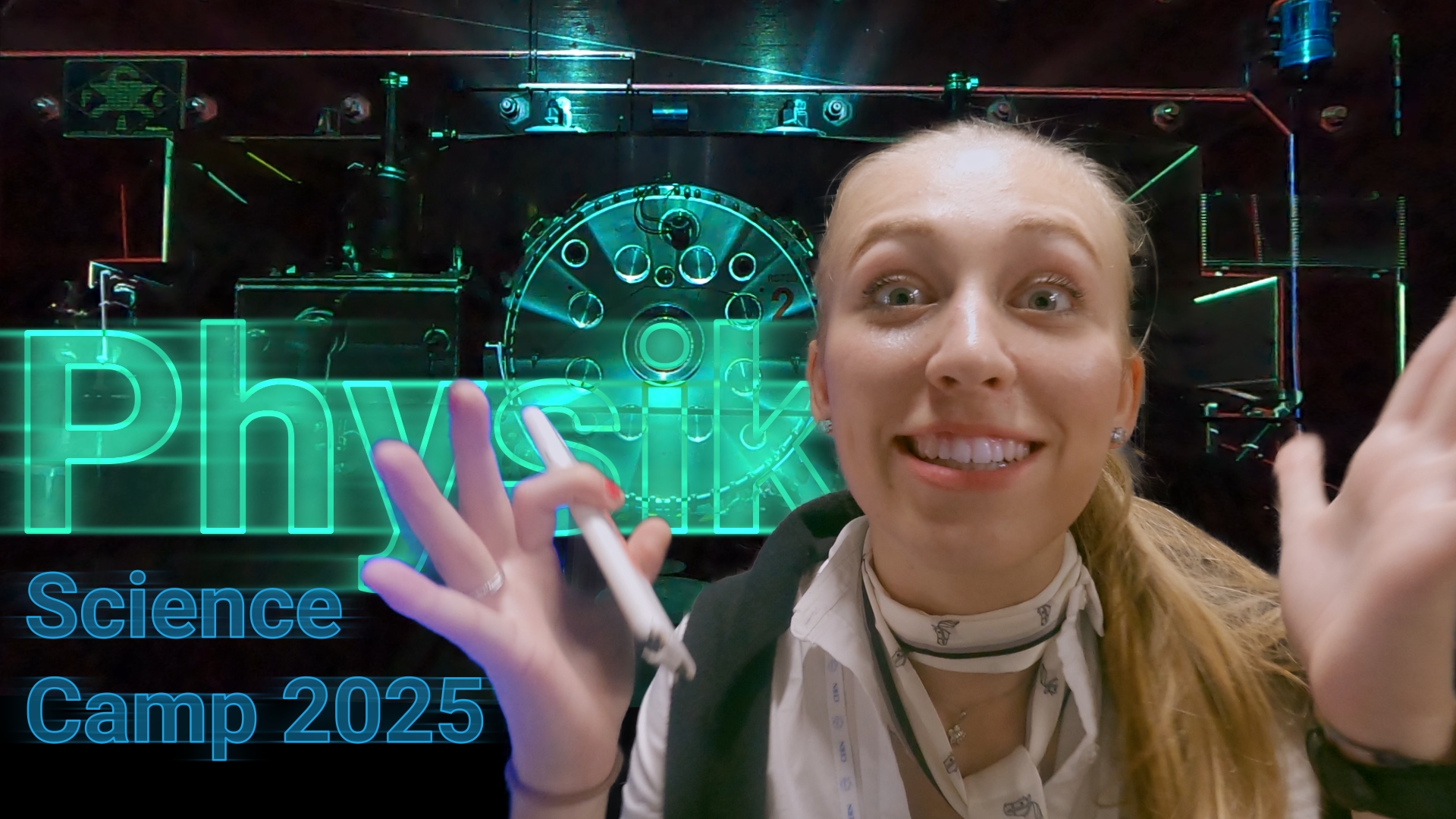
If you find modern physics topics exciting and would like to learn more about them, then ourParticle and Astrophysics Science Campat KIT is just right for you. Here you will learn to understand interrelationships, observe the effects of particle physics yourself in experiments and investigate and evaluate them in a team.
 Contact person at ZML
Michael Gauss
Phone: +49 721 608-48206
E-mail: michael.gauss3∂kit.edu
In addition to beginner-friendly lectures by physics professors, you will also gain insights into current research. A visit to the KATRIN experiment, where the neutrino mass is being investigated experimentally for the first time, as well as the KARA and FLUTE particle accelerators on KIT's North Campus are planned.
You will also work in a small group on one of the various topics of your choice. In this phase, for example, you can build a detector yourself, deal with data collection and evaluation of a particle detector or carry out exciting experiments, such as determining the lifetime of muons (a particle from cosmic radiation). You can even search for Higgs events in the data from the LHC particle accelerator at CERN. By working with measuring devices, programming and theoretical backgrounds, you can work scientifically in different ways and gain insights that you can present to everyone involved in the camp, your family and other interested parties at the end of the week.
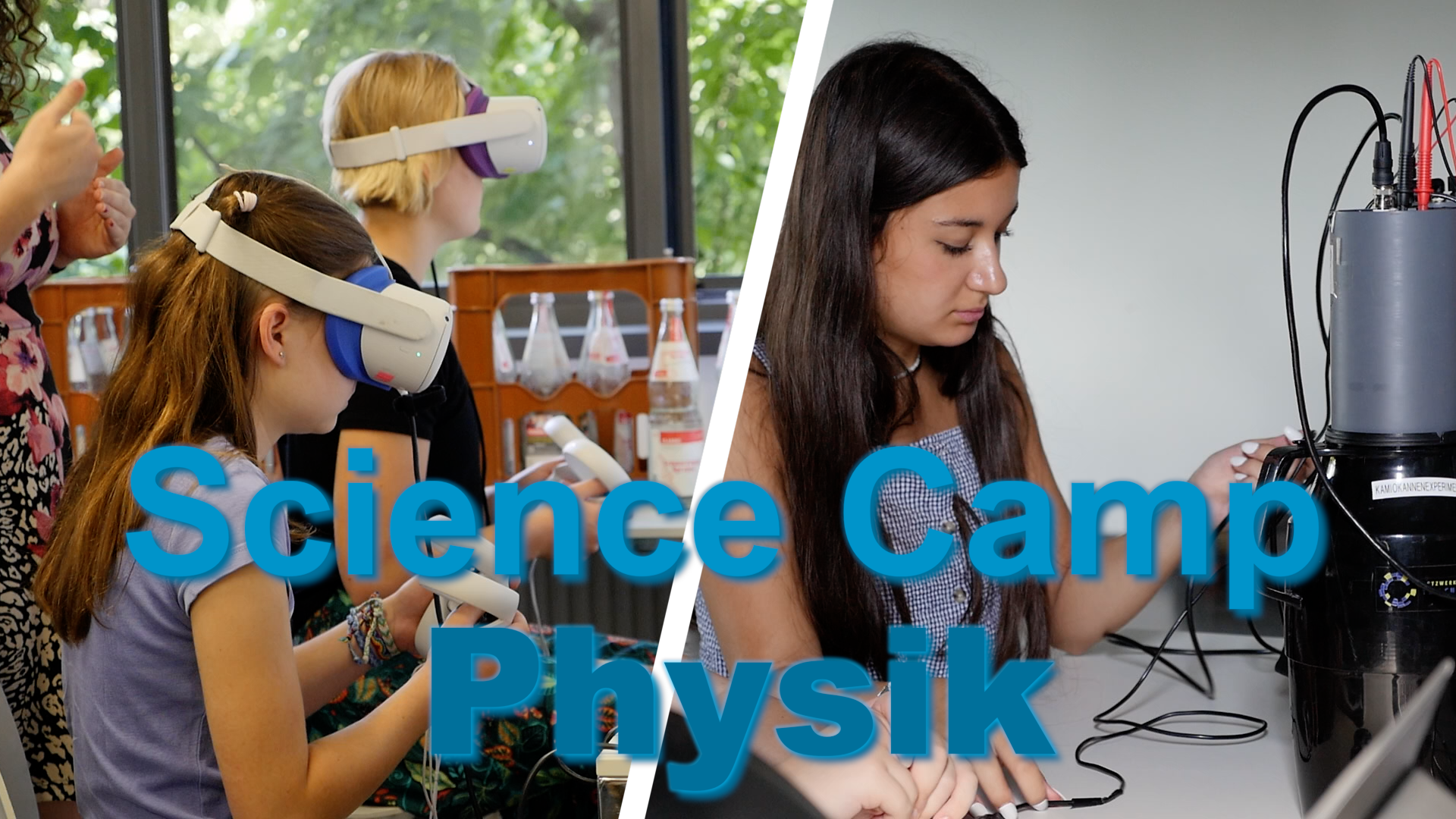
KIT physics students and young scientists will be on hand to give you advice and support throughout the entire camp week (16 - 21.08.26). This will give you the opportunity to find out more about everyday life as a physicist, studying physics and studying at KIT in general.
A varied program also awaits you outside of the work phases. In the evenings, you can look forward to exciting leisure activities. Overnight stays are also included and sufficient catering is provided.
If we have piqued your interest or you have any questions, please do not hesitate to contact us. We look forward to hearing from you!
If the costs are an obstacle for you, there is the possibility of financial support. Just get in touch with us - together we will find a solution!
Overview
Science Camp: Particle and Astroparticle Physics
August 16–21, 2026
For students who have completed 9th grade (entering 10th grade and higher)
The cost for lodging, meals (full board), excursions, experimental materials (components, microcontrollers, and much more), public transportation, and recreational activities (e.g., bouldering or a visit to the planetarium) is 275 euros.
Registration Information
Maximum number of participants: 30 students
Registration and payment of the fee are handled online via the Student Academy website.
You will receive
notification of acceptance or rejection directly from KIT. Please do not transfer the fee to the Student Academy until after you have received this notification.
You may cancel your registration free of charge up to three weeks before the camp begins. In this case, please contact Michael Gauß (gauss∂kit.edu).
The Particle and Astroparticle Physics Science Camp is offered in cooperation with the KIT Elementary Particle and Astroparticle Physics Center, the Institute of Experimental Particle Physics, TRIANGEL at KIT, and the Karlsruhe Student Academy e.V.